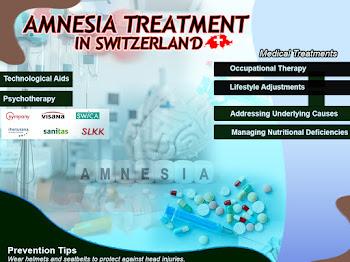
Amnesia Treatment in Switzerland: Complete Guide to Diagnosis, Costs, Insurance & Recovery (2026)
By Gani Yamah
Last Updated: September 11, 2026
Medical Disclaimer
This article is for educational purposes only and should not be considered medical advice. If you or someone you know experiences sudden memory loss, confusion, or neurological symptoms, seek immediate medical attention. Always consult a qualified healthcare professional regarding diagnosis and treatment.
Introduction
Memory is one of the most important functions of the human brain. It allows us to recognize loved ones, learn new skills, remember important events, and perform daily activities. When memory suddenly disappears or becomes impaired, the condition can be frightening for both patients and their families.
Amnesia is a condition characterized by partial or complete memory loss. Depending on the cause, memory loss may be temporary, long-lasting, or permanent. Some individuals forget past events, while others struggle to create new memories after an injury or illness.
Switzerland is recognized for its advanced healthcare system, world-class hospitals, neurological specialists, rehabilitation centers, and comprehensive health insurance coverage. Patients diagnosed with amnesia often receive multidisciplinary care involving neurologists, psychologists, rehabilitation specialists, and other healthcare professionals.
This guide explains everything you need to know about amnesia treatment in Switzerland, including causes, diagnosis, treatment options, recovery expectations, costs, and insurance coverage.
What Is Amnesia?
Amnesia refers to memory loss that affects a person's ability to remember information, experiences, or events.
It is not a disease itself but rather a symptom caused by underlying medical or psychological conditions.
Memory loss can affect:
Personal experiences
Learned information
Recent events
Long-term memories
Ability to form new memories
The severity varies greatly among patients.
Some individuals experience mild memory problems, while others may forget years of their lives.
Types of Amnesia
1. Retrograde Amnesia
Retrograde amnesia affects memories formed before the event that caused memory loss.
Patients may forget:
Childhood memories
Family events
Work experiences
Personal relationships
Older memories are often retained better than recent memories.
2. Anterograde Amnesia
This type affects the ability to create new memories.
Patients can remember past events but struggle to remember new information after the onset of amnesia.
Common challenges include:
Forgetting conversations
Missing appointments
Difficulty learning new skills
3. Transient Global Amnesia (TGA)
Transient Global Amnesia causes sudden, temporary memory loss.
Characteristics include:
Sudden confusion
Repeated questioning
Inability to recall recent events
Recovery within 24 hours
Although frightening, TGA often resolves completely.
4. Traumatic Amnesia
This occurs after:
Head injuries
Concussions
Brain trauma
Accidents
The duration may range from minutes to months.
5. Dissociative Amnesia
Dissociative amnesia is linked to psychological stress or trauma.
Patients may temporarily forget:
Personal information
Traumatic experiences
Important life events
Psychological therapy is often necessary.
Causes of Amnesia
Numerous medical conditions can affect memory.
Brain Injuries
Traumatic brain injuries are a common cause.
Examples include:
Falls
Car accidents
Sports injuries
Workplace accidents
Stroke
A stroke interrupts blood flow to the brain and may damage memory-related regions.
Symptoms often include:
Memory loss
Speech difficulties
Confusion
Weakness
Dementia
Neurodegenerative disorders such as Alzheimer's disease can gradually impair memory.
Risk increases with age.
Brain Infections
Conditions such as:
Encephalitis
Meningitis
can damage brain tissue and affect memory.
Psychological Trauma
Severe emotional stress may trigger temporary memory disturbances.
Examples include:
Violence
Natural disasters
Serious accidents
Emotional trauma
Alcohol and Substance Abuse
Long-term alcohol misuse can cause serious memory problems, including Wernicke-Korsakoff syndrome.
Symptoms of Amnesia
Symptoms vary depending on the underlying cause.
Common signs include:
Forgetfulness
Difficulty recalling names
Losing track of conversations
Repeated questions
Confusion
Difficulty recognizing people
Problems learning new information
Some patients experience anxiety and depression due to memory loss.
Diagnosing Amnesia in Switzerland
Swiss hospitals use comprehensive evaluations to determine the cause.
Medical History
Doctors assess:
Previous illnesses
Medications
Injuries
Family history
Neurological Examination
A neurologist evaluates:
Memory
Reflexes
Coordination
Speech
Cognitive function
Brain Imaging
Advanced imaging may include:
MRI Scan
Provides detailed images of the brain.
CT Scan
Helps identify injuries, bleeding, or structural abnormalities.
Blood Tests
Blood tests can identify:
Infections
Vitamin deficiencies
Metabolic disorders
Neuropsychological Testing
Specialized cognitive assessments measure:
Memory
Attention
Learning ability
Problem-solving skills
Amnesia Treatment in Switzerland
Treatment depends entirely on the underlying cause.
Treatment of Brain Injury-Related Amnesia
For traumatic brain injuries, treatment may involve:
Hospital care
Neurological monitoring
Rehabilitation
Cognitive therapy
Many patients gradually recover memory function over time.
Stroke Rehabilitation
Stroke patients often receive:
Neurological care
Physical therapy
Speech therapy
Occupational therapy
Cognitive rehabilitation
Cognitive Rehabilitation Therapy
Cognitive rehabilitation is one of the most important treatments.
Therapists help patients improve:
Memory skills
Organization
Problem-solving
Daily functioning
Patients may learn strategies such as:
Smartphone reminders
Memory notebooks
Structured routines
Psychological Therapy
When amnesia is related to emotional trauma, therapy may include:
Cognitive Behavioral Therapy (CBT)
Trauma-focused counseling
Stress management
Family support
Medication
There is no universal medication that cures amnesia.
However, medications may be prescribed to treat underlying causes such as:
Depression
Anxiety
Alzheimer's disease
Sleep disorders
Rehabilitation Services in Switzerland
Switzerland offers excellent rehabilitation programs.
These services may include:
Cognitive rehabilitation
Speech therapy
Occupational therapy
Psychological support
Neurological rehabilitation
Treatment plans are individualized based on patient needs.
Recovery and Prognosis
Recovery depends on:
Cause of memory loss
Age
Overall health
Speed of treatment
Temporary Amnesia
Many patients recover fully.
Examples include:
Concussions
Transient Global Amnesia
Mild injuries
Long-Term Amnesia
Some individuals experience permanent memory deficits.
Even in these cases, rehabilitation can improve quality of life and independence.
Cost of Amnesia Treatment in Switzerland
Treatment costs vary significantly.
Service | Estimated Cost (CHF)
General Practitioner Consultation: CHF 100–250
Neurologist Consultation: CHF 250–600
MRI Scan: CHF 500–2,000
CT Scan: CHF 300–1,200
Neuropsychological Assessment: CHF 800–3,000
Cognitive Rehabilitation Session: CHF 100–300
Psychological Therapy Session: CHF 120–300
Hospital Stay Per Day: CHF 1,500–4,000+
Intensive Care Unit (ICU): CHF 3,000–8,000+ per day
Actual costs depend on the hospital, canton, and treatment complexity.
Health Insurance Coverage in Switzerland
Mandatory Health Insurance (LAMal/KVG)
Swiss compulsory health insurance generally covers:
Doctor consultations
Neurological evaluations
Diagnostic imaging
Hospital treatment
Rehabilitation services
Prescription medications
Patients usually pay:
Annual deductible
Coinsurance contributions
Certain out-of-pocket costs
Supplementary Insurance
Additional insurance may provide:
Private hospital rooms
Expanded rehabilitation services
Faster specialist access
Coverage varies by insurer.
Amnesia Treatment for International Visitors
Why Does Amnesia Happen?
Memory problems can have several possible causes. A head injury is one recognized cause, particularly when the brain has been affected by trauma.
Other possible causes include stroke, seizures, infections affecting the brain, reduced oxygen reaching the brain, certain medications, and some neurological conditions.
Long-term heavy alcohol use can also contribute to serious memory problems, particularly when associated with nutritional deficiencies.
Because there are many possible causes, persistent memory loss should be evaluated rather than self-diagnosed.
How Might It Affect Everyday Life?
Amnesia can make ordinary activities more difficult. Someone may forget a recent conversation, struggle to remember instructions, or have difficulty learning information that was recently presented.
A person experiencing memory problems may benefit from practical tools such as calendars, written notes, phone reminders, photographs, and consistent daily routines.
Visitors to Switzerland should ensure they have adequate travel medical insurance.
Emergency medical expenses can be extremely costly without coverage.
Comprehensive travel insurance may cover:
Emergency hospitalization
Neurological treatment
Diagnostic tests
Medical evacuation
Always verify policy terms before travel.
Preventing Memory Loss
Not all cases are preventable, but healthy habits may reduce risk.
Recommendations include:
Regular exercise
Healthy diet
Blood pressure control
Diabetes management
Avoiding excessive alcohol
Wearing helmets during sports
Managing stress
Getting adequate sleep
Frequently Asked Questions
Can amnesia be cured?
Some forms are reversible, while others require long-term management and rehabilitation.
Is memory loss always permanent?
No. Many patients recover partially or completely depending on the cause.
Does Swiss health insurance cover treatment?
In most cases, mandatory Swiss health insurance covers medically necessary diagnosis and treatment.
Which specialist treats amnesia?
Neurologists are usually the primary specialists involved in diagnosis and treatment.
How long does recovery take?
Recovery may take days, weeks, months, or longer depending on the underlying condition.
Conclusion
Amnesia can have a significant impact on daily life, but modern healthcare offers many effective treatment and rehabilitation options. Switzerland's healthcare system provides access to highly trained neurologists, advanced diagnostic technology, specialized rehabilitation centers, and comprehensive insurance coverage.
“Mayo Clinic — Amnesia: Symptoms and Causes” is a good authoritative source to cite in your amnesia article. Mayo Clinic's current page explains symptoms, causes, risk factors, complications, prevention, and when to seek medical attention.
Mayo Clinic — Amnesia: Symptoms and Causes
Mayo Clinic explains that amnesia involves loss of memories and may cause difficulty learning new information or remembering past events. It also discusses causes such as stroke, brain injury, seizures, brain inflammation, certain medications, alcohol-related conditions, and neurological
Early diagnosis is essential because memory loss may be a symptom of serious medical conditions such as stroke, brain injury, infection, or neurological disease. With prompt treatment and ongoing support, many patients experience meaningful improvements in memory, independence, and overall quality of life.
For residents, expats, students, and visitors in Switzerland, understanding available treatment options and insurance coverage can help ensure access to the care needed for the best possible recovery.
Us
Welcome to Financial-Hubs.com
Financial-Hubs.com is an independent health and healthcare information website focused on helping readers better understand health insurance, medical treatment, healthcare costs, and access to healthcare in Switzerland.
Our goal is to make complicated healthcare and insurance information easier to understand by presenting it in clear, practical language.
What We Cover
Our website provides educational information about topics such as:
Swiss health insurance
Switzerland medical treatment and healthcare costs
Travel health insurance
Visitor and expat insurance
Student health insurance
Health insurance for international visitors
Common medical conditions and their treatment
Emergency medical care
Healthcare costs and insurance coverage
Preventive health information
We also publish guides designed to help international visitors, students, expatriates, travelers, and residents understand how healthcare and insurance may work in Switzerland.
Our Approach
Healthcare and insurance information can be difficult to understand, particularly when it involves a different country's healthcare system.
At Financial-Hubs.com, we aim to provide content that is:
Clear — We explain complex subjects in straightforward language.
Useful — Our articles focus on practical questions readers may have about healthcare, insurance, costs, and treatment.
Research-based — We use reputable government, medical, healthcare, and insurance sources when researching our content.
Updated — We review articles periodically and update information when important changes occur.
Transparent — We distinguish general educational information from professional medical or insurance advice.
Medical Information
Our medical articles are written for general educational purposes. We research health information using reputable sources, including government health authorities, international health organizations, medical institutions, and recognized research organizations.
Where appropriate, our articles include references or links to authoritative medical sources.
However, online health information cannot replace an examination or consultation with a qualified healthcare professional.
Health Insurance Information
Insurance policies, premiums, benefits, eligibility requirements, deductibles, and coverage can change.
Information published on Financial-Hubs.com should therefore be used as general educational guidance rather than a substitute for checking the current terms of an insurance policy or contacting the relevant insurer or government authority.
Readers should verify important insurance details directly with the appropriate provider before making financial or healthcare decisions.
Our Editorial Commitment
We are committed to publishing useful and responsible information for our readers.
Our editorial principles include:
Accuracy and clarity
Responsible health communication
Transparent sourcing
Regular content updates
Avoiding misleading medical claims
Separating educational information from professional advice
For more information about how we research and maintain our articles, please visit our Editorial Policy and Medical Sources & References pages.
About the Author
Financial-Hubs.com is created and managed by Gani Yamah, who focuses on developing accessible online resources about health insurance, healthcare, medical treatment, and related topics.
The website's purpose is to make important healthcare information easier for readers to find and understand.
Contact Us
If you have a question, correction, suggestion, or notice an outdated piece of information, please contact us through our Contact Us page.
We welcome feedback that can help improve the accuracy and usefulness of Financial-Hubs.com.
Important Medical Disclaimer
Financial-Hubs.com does not provide medical diagnosis or treatment.
Information published on this website is for general educational and informational purposes only. It should not be used as a substitute for professional medical advice, diagnosis, or treatment.
If you have a medical concern, consult a qualified healthcare professional. If you are experiencing a medical emergency, contact the appropriate emergency medical service immediately.
Financial-Hubs.com — Making healthcare and insurance information easier to understand .

Leave a comment
Your email address will not be published. Required fields are marked *