Stomach Pain Treatment in Switzerland: Complete Guide to Symptoms, Causes, Costs, Insurance Coverage and Recovery (2026)
By Gani Yamah
Last Updated: September 2026
Estimated Reading Time: 10 Minutes
Medical Disclaimer
This article is for educational and informational purposes only and does not replace professional medical advice, diagnosis, or treatment. Stomach or abdominal pain can have many different causes, ranging from minor digestive problems to medical emergencies.
If you experience severe or sudden abdominal pain, persistent vomiting, blood in vomit or stool, black stools, fainting, difficulty breathing, severe dehydration, chest pain, or another serious symptom, seek urgent medical attention.
Always consult a qualified doctor or healthcare professional for diagnosis and treatment.
Introduction
Stomach pain is one of the most common health complaints and can affect people of all ages. The discomfort may be mild and temporary, such as indigestion after a large meal, or it may be caused by an infection, inflammation, digestive disorder, kidney problem, gallbladder disease, or a condition requiring emergency treatment.
Although people commonly use the expression "stomach pain," abdominal discomfort can actually come from many different organs. The stomach, intestines, liver, gallbladder, pancreas, kidneys, appendix, bladder, and reproductive organs can all produce pain in different areas of the abdomen.
Switzerland has a highly developed healthcare system with family doctors, emergency departments, gastroenterologists, diagnostic laboratories, imaging services, and specialized hospitals. Residents with mandatory health insurance can receive coverage for many medically necessary healthcare services according to Swiss insurance rules and their individual circumstances.
For tourists and other visitors, the situation is different. Visitors should have appropriate travel medical insurance because medical treatment can be expensive when healthcare costs are not covered by an applicable insurance arrangement.
This guide explains the common causes of stomach pain, symptoms that require medical attention, diagnosis and treatment options in Switzerland, potential healthcare costs, insurance considerations, recovery, and ways to reduce the risk of digestive problems.
What Is Stomach Pain?
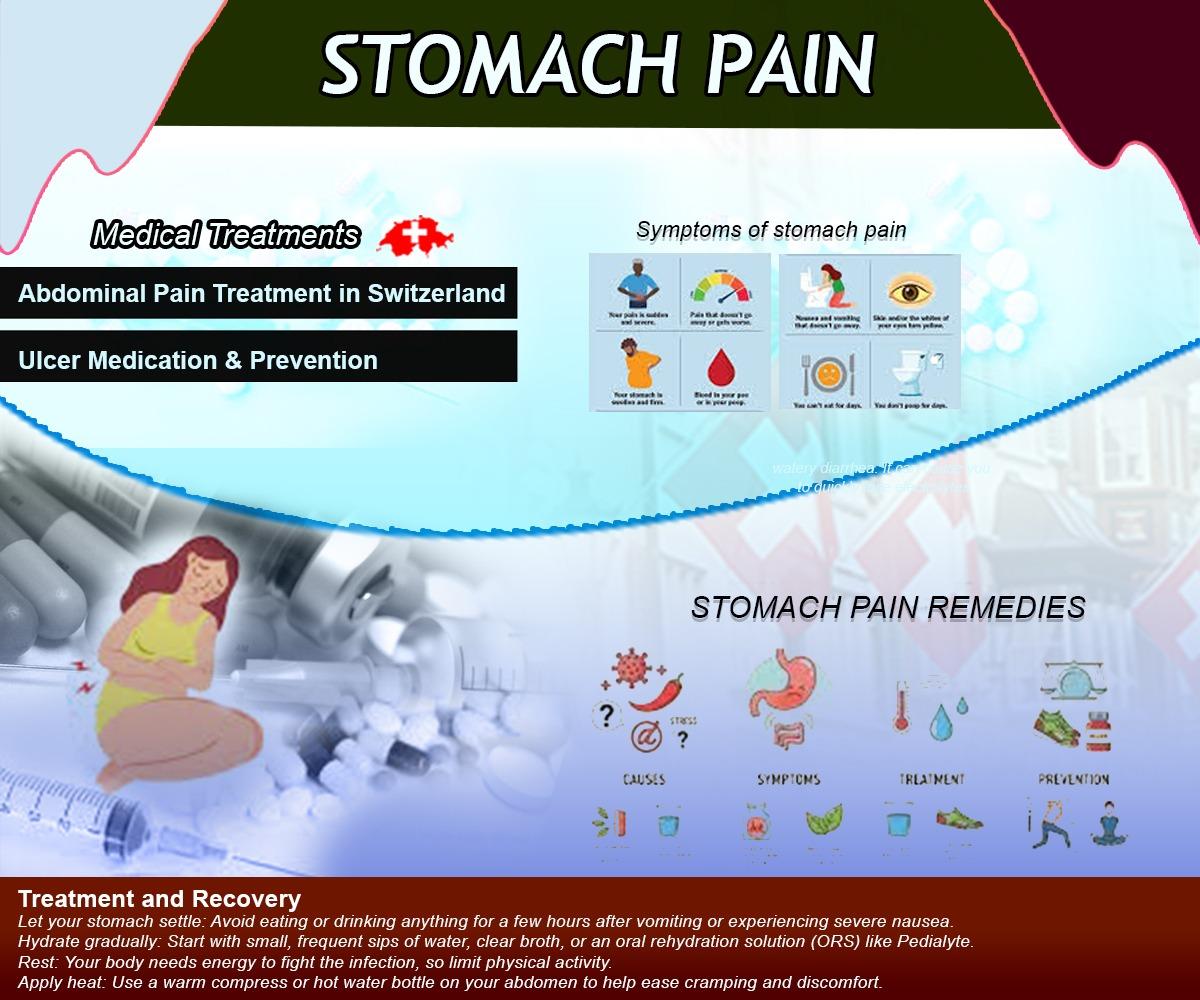
Stomach pain generally refers to discomfort in the abdominal area between the chest and pelvis. The location and character of pain can provide doctors with useful information, but symptoms alone are not enough to determine the exact cause.
Pain can feel:
Sharp
Dull
Burning
Cramping
Stabbing
Aching
Pressure-like
Intermittent
Constant
The pain may occur in the upper abdomen, around the navel, lower abdomen, left side, right side, or throughout the abdominal region.
The location may sometimes provide clues. For example, upper abdominal discomfort can occur with indigestion, gastritis, ulcers, or reflux, while pain in the lower right abdomen can occur with appendicitis. However, many conditions can produce overlapping symptoms, so professional evaluation may be necessary.
Common Symptoms Associated With Stomach Pain
Abdominal pain may occur alone or alongside other symptoms.
Common associated symptoms include:
Nausea
Vomiting
Diarrhea
Constipation
Bloating
Excessive gas
Heartburn
Fever
Loss of appetite
Fatigue
Weight loss
Difficulty eating
Dehydration
Blood in stool
Changes in bowel habits
The combination of symptoms can be more important than the pain itself. Persistent pain accompanied by weight loss, bleeding, fever, repeated vomiting, or significant changes in bowel habits should be medically assessed.
Common Causes of Stomach Pain
1. Indigestion
Indigestion, also called dyspepsia, is a common reason for discomfort in the upper abdomen.
It may occur after:
Eating too quickly
Eating a large meal
Eating certain spicy or fatty foods
Drinking alcohol
Certain medications
Stress
Symptoms can include fullness, bloating, burping, nausea, and upper abdominal discomfort.
Occasional indigestion may improve with changes in eating habits and other lifestyle measures. Recurrent or persistent symptoms should be discussed with a healthcare professional because several different conditions can cause similar symptoms.
2. Gastroenteritis
Gastroenteritis is inflammation of the digestive tract and can be caused by viruses, bacteria, or parasites.
Typical symptoms include:
Diarrhea
Vomiting
Abdominal cramps
Fever
Weakness
Loss of appetite
One of the main concerns with significant vomiting or diarrhea is dehydration.
Treatment often focuses on replacing fluids and electrolytes. People with severe dehydration, persistent vomiting, blood in stool, or serious weakness may require medical assessment.
3. Acid Reflux and GERD
Gastroesophageal reflux disease, commonly called GERD, occurs when stomach contents repeatedly move back into the esophagus.
Symptoms can include:
Heartburn
Burning behind the breastbone
Sour or acidic taste
Upper abdominal discomfort
Regurgitation
Chronic cough
Difficulty swallowing
Occasional reflux is common, but frequent or persistent symptoms should be assessed by a healthcare professional.
Treatment may include lifestyle changes and medication depending on the diagnosis.
4. Gastritis
Gastritis involves inflammation of the stomach lining.
Possible causes include:
Helicobacter pylori infection
Certain pain-relieving medicines
Alcohol
Autoimmune conditions
Other irritation or inflammation of the stomach lining
Symptoms can include burning or aching upper abdominal pain, nausea, vomiting, reduced appetite, and indigestion.
Doctors may recommend testing to identify the underlying cause. Treatment depends on what is causing the inflammation.
5. Peptic Ulcers
Peptic ulcers are sores that develop in the stomach or upper part of the small intestine.
They may cause:
Burning abdominal pain
Nausea
Bloating
Indigestion
Reduced appetite
Weight loss
Some ulcers can bleed or perforate the digestive tract. Bleeding or perforation can be life-threatening and requires urgent medical treatment.
If you notice black, tar-like stools or vomit containing blood, seek emergency medical care.
6. Gallstones
Gallstones are hardened deposits that develop in the gallbladder.
Some people have gallstones without symptoms. Others develop episodes of abdominal pain, particularly after meals.
Pain may occur in the upper right abdomen and can sometimes spread toward the back or shoulder.
Symptoms may include:
Sudden abdominal pain
Nausea
Vomiting
Fever
Jaundice
When gallstones cause repeated or serious problems, treatment may include surgery to remove the gallbladder.
7. Appendicitis
Appendicitis is inflammation of the appendix and is an important cause of acute abdominal pain.
Pain can initially occur around the navel and later become more pronounced in the lower right abdomen.
Other symptoms can include:
Increasing abdominal pain
Fever
Nausea
Vomiting
Loss of appetite
Appendicitis can become dangerous if the appendix ruptures. Anyone experiencing severe or progressively worsening abdominal pain should obtain medical assessment rather than attempting to diagnose the condition at home.
8. Irritable Bowel Syndrome
Irritable bowel syndrome, or IBS, is a long-term gastrointestinal disorder that can cause recurring abdominal pain and changes in bowel habits.
Symptoms may include:
Abdominal cramps
Bloating
Diarrhea
Constipation
Gas
Changes in bowel movements
IBS does not usually cause structural damage to the digestive tract, but symptoms can significantly affect daily life.
Management may involve dietary changes, physical activity, stress management, medication, and nutritional support depending on the individual.
9. Food Intolerances
Certain foods can trigger digestive symptoms in some people.
Possible triggers include:
Dairy products
Certain carbohydrates
Some fruits and vegetables
Artificial sweeteners
Other individual food triggers
Symptoms can include bloating, gas, cramps, and diarrhea.
Keeping a food and symptom diary can sometimes help identify patterns. However, unnecessary elimination diets should be approached carefully, particularly when they remove important nutrients.
10. Kidney Stones
Kidney stones can produce extremely painful episodes that may be felt in the side, back, abdomen, or groin.
Other symptoms can include:
Nausea
Vomiting
Blood in urine
Painful urination
Frequent urination
Treatment depends on the size and location of the stone and whether complications are present. Some stones pass naturally, while others require medication or a procedure.
Other Causes of Abdominal Pain
Stomach pain can also result from conditions such as:
Crohn's disease
Ulcerative colitis
Pancreatitis
Diverticular disease
Hernias
Urinary tract infections
Endometriosis
Ovarian cysts
Bowel obstruction
Certain cancers
Because different diseases can produce similar symptoms, persistent or unexplained abdominal pain should not be self-diagnosed.
When Is Stomach Pain an Emergency?
Most abdominal pain is not life-threatening, but certain warning signs require urgent medical attention.
Seek emergency care if abdominal pain is:
Sudden and severe
Rapidly getting worse
Associated with fainting
Accompanied by significant bleeding
Associated with persistent vomiting
Accompanied by severe dehydration
Associated with difficulty breathing
Accompanied by chest pain
Associated with a high fever
Occurring during pregnancy with concerning symptoms
In Switzerland, the emergency medical telephone number is 144.
If the situation appears life-threatening, do not delay medical care while trying to determine whether your insurance will pay.
Diagnosing Stomach Pain in Switzerland
Doctors usually begin by discussing the symptoms and performing a physical examination. Additional tests depend on the suspected cause.
Medical History
A doctor may ask:
When did the pain begin?
Where exactly is the pain?
Is it constant or intermittent?
How severe is it?
Does eating make it better or worse?
Have you experienced vomiting or diarrhea?
Have you noticed blood in your stool?
Have you recently travelled?
What medications are you taking?
Do you have existing medical conditions?
These questions help the doctor decide which investigations may be appropriate.
Physical Examination
A doctor may examine the abdomen for:
Tenderness
Swelling
Muscle rigidity
Pain in specific areas
Other signs that may indicate inflammation or an acute abdominal condition
The examination is particularly important when pain is severe or sudden.
Blood Tests
Blood tests can provide information about inflammation, infection, anemia, liver function, pancreatic function, and other possible causes.
The exact tests depend on the symptoms and clinical assessment.
Stool Tests
Stool testing may be recommended when symptoms suggest an intestinal infection, gastrointestinal bleeding, or certain other digestive conditions.
Tests can sometimes identify infectious organisms or other abnormalities.
Urine Tests
Urine analysis may help doctors investigate conditions involving the urinary system.
It can be useful when kidney stones, urinary tract infections, or other urinary problems are possible.
Ultrasound
Ultrasound uses sound waves to create images of internal organs.
It may be useful for evaluating structures such as:
Gallbladder
Liver
Kidneys
Biliary system
Other abdominal structures
It is particularly useful in some situations because it does not use ionizing radiation.
CT Scan
Computed tomography, or CT, provides detailed cross-sectional images of the abdomen.
It can be particularly useful when doctors need to investigate acute abdominal pain or suspected complications.
Depending on the circumstances, contrast material may be used.
MRI
Magnetic resonance imaging uses magnetic fields and radio waves to produce detailed images.
MRI may be used in selected situations where additional information is required.
Endoscopy
An upper gastrointestinal endoscopy allows a doctor to examine the upper digestive tract using a flexible camera.
It may help investigate:
Persistent upper abdominal symptoms
Ulcers
Gastritis
Gastrointestinal bleeding
Reflux-related problems
Other abnormalities
During an endoscopy, doctors may also take tissue samples when medically appropriate.
Treatment Options in Switzerland
Treatment depends on the underlying cause.
There is no single treatment that is appropriate for every type of stomach pain.
Lifestyle and Dietary Changes
For some digestive conditions, healthcare professionals may recommend:
Eating smaller meals
Maintaining adequate hydration
Reducing foods that trigger symptoms
Limiting excessive alcohol
Avoiding smoking
Maintaining regular physical activity
Managing stress
Maintaining a healthy body weight where appropriate
These measures may help some conditions but should not replace medical evaluation when warning signs are present.
Medication
Depending on the diagnosis, doctors may use different types of medication.
Antacids
These can provide short-term relief from some acid-related symptoms.
Proton Pump Inhibitors
PPIs reduce stomach acid production and may be prescribed for conditions such as certain forms of reflux or ulcers.
Antibiotics
Antibiotics may be used when a bacterial infection such as H. pylori is confirmed or strongly suspected according to medical assessment.
Anti-Nausea Medication
These medications may help control nausea and vomiting in selected situations.
Antispasmodics
Some medications can help reduce intestinal spasms or cramping.
Medication choice depends on the diagnosis, age, existing conditions, other medicines, and potential side effects.
Treatment for Gastroenteritis
For uncomplicated gastroenteritis, treatment commonly focuses on:
Fluid replacement
Electrolytes
Rest
Appropriate nutrition
Symptom management
Antibiotics are not appropriate for every case because many episodes are caused by viruses.
People who cannot keep fluids down, become severely dehydrated, develop significant bleeding, or have severe symptoms may require medical assessment or hospital treatment.
Treatment for IBS
IBS management can be individualized.
Possible approaches include:
Dietary adjustments
Fiber management
Physical activity
Stress management
Medication
Nutritional counseling
Follow-up with a gastroenterology specialist when appropriate
The goal is generally to reduce symptoms and improve daily functioning.
Surgical Treatment
Some causes of abdominal pain require surgery or another procedure.
Examples include:
Appendicitis
Complicated gallstone disease
Bowel obstruction
Certain tumors
Perforated ulcers
Other surgical emergencies
Swiss hospitals provide a range of surgical and minimally invasive procedures. Recovery depends on the condition, procedure, patient's overall health, and whether complications occur.
Stomach Pain Treatment Costs in Switzerland
Healthcare costs can vary substantially depending on the canton, healthcare provider, hospital, diagnostic tests, complexity of treatment, and patient's insurance situation.
The following figures are illustrative estimates rather than fixed Swiss prices:
Service
Possible Cost Range
GP consultation
CHF 100–250
Specialist consultation
CHF 200–500
Blood tests
CHF 50–300
Stool testing
CHF 50–250
Ultrasound
CHF 200–600
CT scan
CHF 500–1,500
MRI
CHF 800–2,500
Endoscopy
CHF 800–2,500
Emergency department visit
CHF 300–2,000+
Appendectomy
CHF 8,000–20,000+
Gallbladder surgery
CHF 10,000–25,000+
These numbers should not be presented as official nationwide prices. Actual bills can be higher or lower depending on the circumstances.
For a patient considering treatment in Switzerland, obtaining a current estimate from the relevant healthcare provider is preferable.
Does Swiss Health Insurance Cover Stomach Pain Treatment?
For people insured under Switzerland's mandatory health insurance system, medically necessary healthcare can generally be covered according to the applicable legal and insurance rules.
Depending on the circumstances, covered healthcare may include medically necessary:
Doctor consultations
Diagnostic investigations
Hospital treatment
Surgical treatment
Certain prescription medicines
Specialist care
However, coverage does not mean that the patient pays nothing.
Swiss insured patients can have cost-sharing obligations, including:
Deductible
Coinsurance
Certain other contributions
Services outside mandatory coverage
The exact amount a person pays depends on their insurance arrangement and circumstances.
Stomach Pain Treatment for Tourists in Switzerland
Tourists can receive medical treatment in Switzerland, including emergency treatment.
However, tourists should not assume that Switzerland's mandatory resident health insurance system automatically covers them.
Visitors should arrange appropriate travel medical insurance before travelling.
A suitable travel insurance policy may provide benefits for:
Emergency medical treatment
Hospitalization
Emergency transportation
Medical evacuation
Repatriation
Certain prescription medications
Other covered travel-related medical expenses
Coverage depends on the individual policy.
Tourists should carry their insurance certificate and emergency assistance contact information while travelling.
What Should You Do If You Become Sick While Visiting Switzerland?
If you develop stomach pain during a trip, the appropriate response depends on the severity.
For mild symptoms, you may monitor your condition while maintaining hydration and following appropriate general health measures.
If symptoms persist, worsen, or interfere significantly with eating and drinking, contact a healthcare professional.
For severe symptoms or emergency warning signs, seek urgent medical care.
If hospitalization or major treatment is required, contact your travel insurer as soon as reasonably possible after receiving necessary emergency care.
Do not delay emergency treatment because you are worried about insurance.
Recovery After Stomach Pain Treatment
Recovery depends entirely on the cause.
Minor Digestive Problems
Indigestion and some mild digestive complaints may improve within hours or several days.
Gastrointestinal Infections
Many uncomplicated infections improve over several days, although some infections can last longer.
Hydration is particularly important when vomiting or diarrhea is present.
Chronic Conditions
Conditions such as IBS, GERD, Crohn's disease, and ulcerative colitis may require longer-term management rather than a single treatment.
Surgical Conditions
Recovery following appendectomy, gallbladder surgery, or another abdominal operation can take several weeks, depending on the procedure and individual circumstances.
Patients should follow the instructions provided by their healthcare team regarding diet, activity, medications, wound care, and follow-up appointments.
Preventing Stomach Pain
Not every cause of abdominal pain can be prevented, but several healthy habits can support digestive health.
These include:
Eating a balanced diet
Drinking sufficient fluids
Washing hands regularly
Practicing good food hygiene
Limiting excessive alcohol
Avoiding smoking
Exercising regularly
Managing stress
Maintaining a healthy weight
Taking medications only as directed
Seeking medical attention for persistent symptoms
People with known digestive disorders should follow the management plan recommended by their healthcare professional.
Living With Chronic Digestive Disorders
Some people experience recurring abdominal symptoms because of chronic digestive disorders.
Examples include:
IBS
GERD
Crohn's disease
Ulcerative colitis
Chronic gastritis
In Switzerland, patients may be referred to gastroenterologists for specialized assessment.
Depending on the condition, long-term care may include:
Regular consultations
Laboratory testing
Imaging
Endoscopy
Medication
Dietary guidance
Nutritional counseling
Monitoring for complications
The purpose of long-term management is to control symptoms, identify complications early, and maintain quality of life.
Frequently Asked Questions
Is

Leave a comment
Your email address will not be published. Required fields are marked *