Smallpox Disease Treatment in Switzerland: Complete Guide to Symptoms, Prevention, Medical Care and Public Health Response (2026)
By Gani Yamah
Last Updated: September 2026
Medical Disclaimer
This article is provided for educational and informational purposes only. It does not constitute medical advice, diagnosis, or treatment. Smallpox has been eradicated worldwide, and naturally occurring transmission has not been reported since 1977.
Information about possible treatment, vaccination, and public-health response is based on historical medical knowledge and current information from organizations such as the World Health Organization (WHO) and the U.S. Centers for Disease Control and Prevention (CDC). In the extremely unlikely event of a suspected smallpox case, individuals should follow instructions from qualified healthcare professionals and public health authorities.
Financial-Hubs.com does not provide medical diagnosis or emergency medical services.
Introduction
Smallpox was once one of the deadliest infectious diseases in human history. For thousands of years, it caused widespread illness, severe scarring, blindness, disability, and millions of deaths around the world.
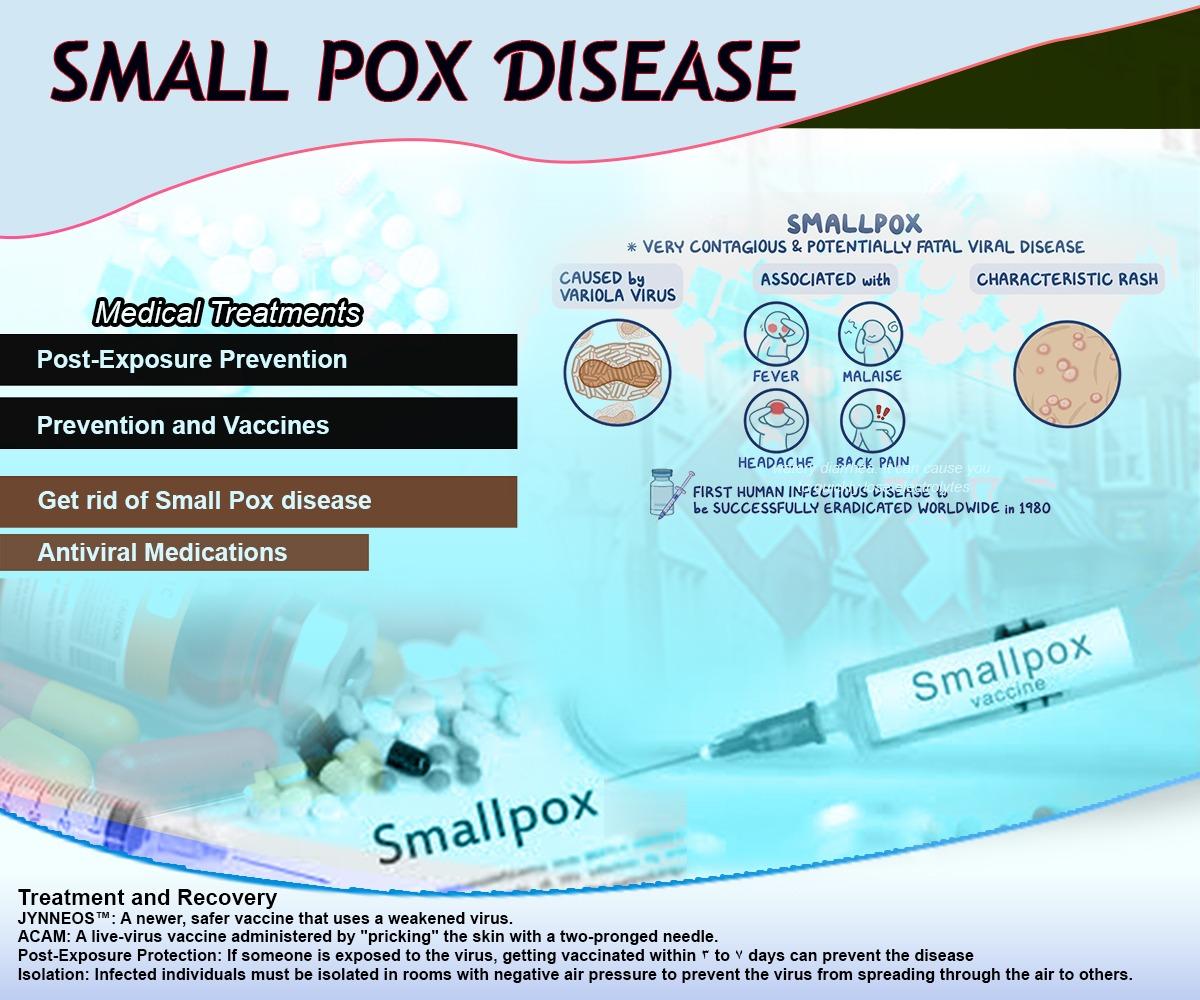
Smallpox was caused by the Variola virus, an orthopoxvirus that could spread between people through close contact and respiratory droplets. Severe disease could cause extensive skin lesions and serious complications.
Thanks to an international vaccination and surveillance campaign led by the World Health Organization, smallpox became the first human disease to be completely eradicated. The last naturally occurring case was recorded in Somalia in 1977, and global eradication was certified by WHO in 1980.
World Health Organization
Although smallpox no longer occurs naturally, preparedness remains important. WHO continues to maintain expertise and emergency preparedness activities related to smallpox, while countries maintain systems for responding to serious infectious-disease threats.
For Switzerland, understanding smallpox is therefore less about routine treatment and more about recognition, emergency preparedness, infection control, vaccination strategies, and international public-health coordination.
This guide explains smallpox symptoms, causes, historical treatment, modern antiviral options, vaccination, prevention, and how a suspected case could be managed in Switzerland.
What Is Smallpox?
Smallpox is an acute infectious disease caused by the Variola virus.
It belongs to the orthopoxvirus family, which includes several related viruses. Smallpox was particularly dangerous because it could cause severe systemic illness and a characteristic widespread rash.
Historically, transmission occurred primarily through prolonged close contact with an infected person. Respiratory droplets and contact with contaminated materials such as bedding and clothing could also contribute to transmission.
World Health Organization
The disease had a relatively long incubation period. Symptoms generally appeared approximately 7–17 days after exposure, although individual cases could vary.
Key Facts About Smallpox
Caused by the Variola virus
Highly contagious
Historically associated with substantial mortality
Can cause extensive skin lesions and permanent scarring
Vaccination was the major tool used for eradication
Last naturally occurring case was recorded in 1977
WHO declared smallpox eradicated in 1980
Routine vaccination is no longer recommended for the general population
Emergency preparedness remains important
WHO describes smallpox as the only human infectious disease to have been eradicated globally.
World Health Organization
History of Smallpox in Switzerland and Europe
Like many European countries, Switzerland experienced smallpox before modern vaccination and organized public-health programs became established.
The development of vaccination changed the history of the disease. Edward Jenner's work in 1796 demonstrated that exposure to cowpox could provide protection against smallpox, establishing the foundation of modern vaccination.
World Health Organization
During the twentieth century, vaccination programs became increasingly widespread.
The WHO intensified the global eradication campaign in 1967. The program combined vaccination with surveillance, rapid identification of cases, investigation of contacts, and containment of outbreaks.
The last naturally occurring case was identified in Somalia in 1977. Following extensive international verification, global eradication was certified in 1979 and endorsed by the World Health Assembly in 1980.
World Health Organization
Today, Switzerland does not use routine smallpox vaccination for the general population. The focus is instead on preparedness and the ability to respond to an extraordinary event.
What Causes Smallpox?
Smallpox is caused by the Variola virus.
Historically, infection could occur through:
Respiratory droplets during close contact
Prolonged face-to-face contact
Direct contact with infectious lesions
Contaminated clothing
Contaminated bedding
Contact with body fluids
Transmission generally became possible after symptoms developed, particularly during the period when characteristic lesions were present.
Unlike some respiratory infections, smallpox was not simply a disease that spread casually through brief encounters. Close and sustained contact played an important role in transmission.
Symptoms of Smallpox
Smallpox developed through several stages.
Early Symptoms
The illness typically began with systemic symptoms rather than immediately producing the characteristic rash.
Early symptoms could include:
High fever
Severe headache
Severe fatigue
Back pain
Muscle aches
Chills
Vomiting
Abdominal discomfort in some cases
WHO notes that high fever, fatigue, and severe back pain were characteristic early symptoms.
World Health Organization
Rash Stage
Several days after the initial fever, the characteristic rash appeared.
The rash commonly began on the face and hands before spreading to other parts of the body. Lesions could also occur in the mouth and other mucous membranes.
World Health Organization
The lesions progressed through stages that included:
Flat red spots
Raised lesions
Clear fluid-filled lesions
Pus-filled lesions
Crusting
Scab formation
Healing and separation of scabs
One important historical feature was that lesions in a particular area tended to develop at approximately the same stage.
After recovery, deep scars could remain permanently.
Types of Smallpox
Historically, two major clinical forms were commonly recognized.
Variola Major
Variola major was the more severe form and was associated with much higher mortality.
WHO reports mortality of approximately 30% for variola major, although outcomes varied according to the population and form of disease.
World Health Organization
Variola Minor
Variola minor generally caused milder illness and had a much lower mortality rate, reported by WHO at approximately
World Health Organization
There were also rare severe forms, including hemorrhagic and malignant forms.
How Smallpox Was Diagnosed
Historically, physicians relied heavily on clinical features.
They looked for:
Characteristic fever
Typical rash distribution
Lesions at similar stages of development
Mouth or mucosal lesions
Epidemiological links to other suspected cases
Modern diagnosis would require specialized laboratory investigation.
Possible laboratory approaches include molecular testing and other specialized methods capable of identifying variola or distinguishing it from other orthopoxviruses.
Because naturally occurring smallpox has been eradicated, a suspected case today would be considered an extraordinary public-health event requiring immediate investigation.
Is There a Cure for Smallpox?
Historically, there was no proven curative treatment that could reliably eliminate smallpox after illness had developed.
Medical care focused primarily on:
Supporting the patient
Managing fever and pain
Maintaining hydration
Treating complications
Preventing or treating secondary bacterial infections
Protecting affected areas of the body
WHO notes that vaccination after exposure was historically an important strategy for preventing or reducing disease.
World Health Organization
Modern antiviral drugs have subsequently been developed, but there is an important limitation: because naturally occurring smallpox has been eradicated, these medicines have not been tested in clinical trials involving people with naturally acquired smallpox.
CDC
How Smallpox Would Be Treated in Switzerland Today
If a suspected smallpox case were ever identified in Switzerland, management would focus on rapid isolation, specialist medical care, laboratory confirmation, contact investigation, vaccination of appropriate contacts, and public-health coordination.
Treatment would involve several components.
1. Isolation
A suspected patient would be separated from other people to reduce the possibility of transmission.
Healthcare professionals would use appropriate infection-prevention and environmental-control procedures.
Isolation would protect:
Family members
Healthcare workers
Other patients
Hospital visitors
The wider community
CDC guidance states that treatment of a smallpox patient in a healthcare setting requires isolation and appropriate infection and environmental controls.
CDC
2. Supportive Medical Care
Supportive care would remain important.
Depending on the patient's condition, medical professionals could provide:
Intravenous fluids
Fever management
Pain control
Nutritional support
Oxygen when medically necessary
Treatment of complications
Monitoring of vital signs and organ function
The exact treatment would depend on the patient's clinical condition.
3. Prevention and Treatment of Secondary Infections
Extensive skin lesions can create opportunities for bacterial infection.
Doctors would therefore monitor for complications such as:
Secondary skin infections
Pneumonia
Bloodstream infections
Eye complications
Dehydration
If a bacterial infection were diagnosed, appropriate antibiotics could be prescribed by medical professionals.
4. Monitoring for Complications
Severe smallpox could affect multiple organs.
Patients would therefore require close medical observation for complications involving:
The lungs
Eyes
Skin
Nervous system
Circulatory system
Other organs
Severely ill patients could require intensive-care support.
Modern Antiviral Treatments
Although there are no naturally occurring smallpox cases today, antiviral medicines have been developed as part of smallpox preparedness.
Tecovirimat (TPOXX)
Tecovirimat is an antiviral drug that has been approved by the U.S. FDA for treatment of smallpox.
However, its effectiveness against human smallpox has not been demonstrated through clinical trials in naturally infected patients. Approval relied on laboratory and animal evidence under the FDA's Animal Rule.
CDC
Brincidofovir (TEMBEXA)
Brincidofovir is another antiviral that has received FDA approval for treatment of smallpox.
Like tecovirimat, evidence for smallpox efficacy comes largely from laboratory and animal studies because human clinical trials for naturally occurring smallpox cannot ethically or practically be conducted.
CDC
Cidofovir
Cidofovir has demonstrated activity against orthopoxviruses in laboratory and animal studies.
However, CDC notes that cidofovir is not FDA-approved for treatment of smallpox. Its use for orthopoxvirus infections would involve an individual clinical risk-benefit assessment.
CDC
The availability and regulatory status of specific medicines in Switzerland could differ from the United States. Any decision about antiviral treatment would therefore be made by specialist clinicians and public-health authorities.
Smallpox Vaccination
Vaccination was the most important tool in eliminating smallpox.
The traditional smallpox vaccine did not contain Variola virus. Instead, it used vaccinia virus, a related orthopoxvirus capable of producing protective immunity.
WHO reports that the smallpox vaccine was a central component of the global eradication campaign.
World Health Organization
Vaccination After Exposure
One of the important features of smallpox control was the ability to vaccinate people after exposure.
Vaccination shortly after exposure could prevent disease or reduce its severity.
WHO states that vaccination could be effective when given during the incubation period, while CDC notes that vaccination with appropriate replication-competent smallpox vaccines can prevent or lessen disease when administered soon after exposure.
CDC
The exact timing and vaccine used would be determined by public-health authorities.
Does Switzerland Offer Routine Smallpox Vaccination?
Smallpox vaccination is not part of routine vaccination for the general population because smallpox has been eradicated.
WHO recommended ending routine vaccination following eradication, with vaccination reserved for specific high-risk situations such as certain research personnel.
World Health Organization
Potentially relevant groups in an emergency could include:
Specialized laboratory personnel
Researchers working with orthopoxviruses
Certain emergency-response personnel
People identified as having a significant exposure
Smallpox vaccines can cause adverse reactions, including rare serious complications, so routine vaccination of the general population is not considered necessary after eradication.
Public Health Response in Switzerland
If a confirmed or strongly suspected smallpox case occurred, the response would be coordinated through Switzerland's public-health system.
Possible measures could include:
Contact Tracing
Authorities would identify people who had close contact with the patient.
These individuals could be monitored for symptoms and assessed for vaccination or other public-health measures.
Emergency Vaccination
People identified as having a significant exposure could be offered vaccination according to the response plan.
This approach is sometimes described as ring vaccination, where vaccination is focused around identified cases and their contacts rather than automatically vaccinating an entire population.
Isolation and Monitoring
Confirmed patients would remain isolated under appropriate infection-control procedures.
Exposed individuals could be monitored for symptoms during the relevant incubation period.
Laboratory Investigation
Specialized laboratories would investigate suspected samples and help distinguish smallpox from other diseases that can produce similar symptoms.
International Coordination
Because infectious diseases do not respect national borders, Switzerland would coordinate with international public-health organizations, including WHO, when appropriate.
Rapid reporting and coordinated investigation would be particularly important because a confirmed smallpox case would represent an extraordinary event.
Smallpox and Mpox Are Not the Same Disease
Smallpox is sometimes confused with mpox because both belong to the orthopoxvirus family.
However, they are different diseases.
Smallpox is caused by Variola virus and has been eradicated.
Mpox is caused by monkeypox virus and continues to occur.
The two diseases can share some clinical features, including fever and skin lesions, but they are not interchangeable diagnoses.
This distinction is important because a person with a rash should not assume that it represents smallpox. A healthcare professional would need to evaluate the symptoms, medical history, exposure history, and appropriate laboratory tests.
Potential Complications of Smallpox
Before eradication, smallpox could produce serious complications.
These included:
Severe Scarring
Survivors could develop permanent deep scars, particularly on the face.
Blindness
Eye involvement could cause permanent visual impairment or blindness.
Pneumonia
Severe infection could affect the lungs.
Neurological Complications
Inflammation involving the nervous system could occur in some cases.
Severe Dehydration
Fever, vomiting, and extensive illness could contribute to dehydration.
Death
WHO reports that smallpox could be fatal in up to approximately 30% of cases, particularly with severe forms.
World Health Organization
Cost of Smallpox Treatment in Switzerland
There is no standard price for smallpox treatment in Switzerland because naturally occurring smallpox does not currently occur.
A hypothetical emergency case could involve substantial healthcare resources because of:
Specialized isolation
Hospitalization
Laboratory testing
Infection-control measures
Medical monitoring
Intensive care where necessary
Antiviral medicines
Public-health investigation
The exact financial arrangements would depend on the patient's circumstances and applicable Swiss health-insurance and public-health rules.
For this reason, it would be misleading to publish a fixed CHF price for “smallpox treatment in Switzerland.”
Prevention Tips
There is no need for the general public to seek routine smallpox vaccination simply because they are traveling to Switzerland.
Because smallpox has been eradicated, ordinary travelers are not normally exposed to naturally circulating smallpox.
General infectious-disease precautions nevertheless remain useful:
Follow official health guidance.
Maintain good personal hygiene.
Seek professional medical advice for unexplained severe illness.
Report relevant travel or exposure history to healthcare professionals.
Cooperate with public-health authorities during an infectious-disease investigation.
Avoid spreading unverified information during a public-health emergency.
If authorities ever announce a suspected smallpox exposure, people should follow official instructions rather than attempting self-treatment.
Smallpox and Modern Pandemic Preparedness
The history of smallpox demonstrates the importance of disease surveillance and international cooperation.
The eradication campaign combined vaccination with surveillance and rapid containment. WHO's intensified eradication program began in 1967, and the final naturally occurring case was recorded a decade later.
World Health Organization
The experience created valuable lessons for modern public health.
These include:
Detecting unusual diseases quickly
Confirming diagnoses through laboratory testing
Identifying contacts
Protecting healthcare workers
Communicating reliable information
Coordinating across national borders
Maintaining emergency medical supplies
Using vaccination strategically
Smallpox therefore remains relevant even though the disease itself has disappeared from natural circulation.
Frequently Asked Questions
Does smallpox still exist?
Smallpox has been eradicated worldwide. The last known naturally occurring case was recorded in Somalia in 1977, and WHO declared the disease eradicated in 1980.
World Health Organization
Can smallpox be cured?
Historically, there was no proven curative treatment. Modern antivirals such as tecovirimat and brincidofovir have been developed and approved in the United States for smallpox treatment, but their effectiveness has not been demonstrated in clinical trials involving naturally infected smallpox patients.
CDC
Is smallpox vaccination still available?
Smallpox vaccines exist, but routine vaccination of the general population stopped after eradication. Vaccination may be used for certain high-risk grous or during an emergency response.
World Health Organization
Is smallpox dangerous?
Yes. Historically, smallpox was a serious and potentially fatal disease. WHO estimates that mortality could reach approximately 30% for variola major.
World Health Organization
Can travelers get smallpox from visiting Switzerland?
Naturally occurring smallpox is not circulating in Switzerland or elsewhere. Routine smallpox vaccination is therefore not required simply for travel to Switzerland.
What should someone do if they think they have smallpox?
Because smallpox has.
About Gani Yamah
Gani Yamah is the founder and writer behind Financial Hubs, a health and insurance information website focused on helping readers better understand healthcare, health insurance, medical treatment, and travel health.
His work focuses particularly on Switzerland, including Swiss health insurance, healthcare costs, medical treatment, visitor and travel insurance, and practical information for international visitors, students, workers, expatriates, and families.
Gani's goal is to make complex healthcare and insurance topics easier to understand by presenting information in clear, accessible language. His articles discuss subjects such as health insurance coverage, medical costs, treatment options, preventive healthcare, and navigating healthcare services in Switzerland.
Financial Hubs is an independent informational website. The content is created for educational purposes and is not intended to replace advice from qualified doctors, healthcare professionals, insurance advisers, or other licensed professionals.
Where appropriate, articles reference reputable medical, governmental, healthcare, and insurance sources so readers can verify important information and explore topics in greater depth.
Editorial Approach
Gani aims to produce useful, clearly structured, and regularly updated articles. Content is reviewed for clarity, relevance, accuracy, and usefulness, particularly when discussing healthcare costs, insurance rules, medical terminology, and Switzerland-specific information.
Because healthcare regulations, insurance policies, costs, and medical guidance can change, readers should confirm important information with the relevant healthcare provider, insurer, or official authority before making decisions.
Author: Gani Yamah
Website: Financial Hubs
Focus: Switzerland health insurance, healthcare, medical treatment, and travel health

Leave a comment
Your email address will not be published. Required fields are marked *