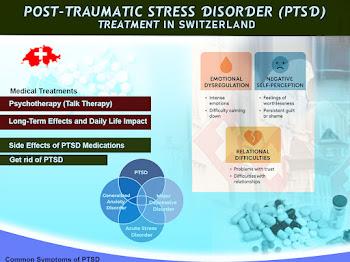
Post-Traumatic Stress Disorder (PTSD) Treatment in Switzerland: Complete Guide to Symptoms, Costs, Insurance Coverage and Recovery (2026)
By Gani Yamah
Last Updated: September 2026
Estimated Reading Time: 12 Minutes
Medical Disclaimer
This article is provided for educational and informational purposes only. It does not replace professional medical advice, diagnosis, or treatment. PTSD can be a serious mental health condition. If you or someone you know is experiencing severe psychological distress, thoughts of self-harm, or another mental health emergency, seek immediate professional help or contact local emergency services.
Introduction
Post-Traumatic Stress Disorder (PTSD) is a mental health condition that can develop after experiencing or witnessing a traumatic or extremely frightening event.
Trauma can result from many situations, including serious accidents, physical assault, sexual violence, domestic violence, war, natural disasters, serious medical emergencies, or the unexpected death of someone close.
Not everyone who experiences trauma develops PTSD. Some people gradually recover with time and support, while others continue to experience symptoms for months or years.
PTSD can affect sleep, concentration, employment, relationships, physical health, and everyday activities. Fortunately, PTSD is treatable, and evidence-based psychological therapies can help many people reduce symptoms and regain normal functioning.
For people living in Switzerland—including Swiss residents, expats, students, workers, and some international visitors—understanding how PTSD is diagnosed, where treatment can be obtained, what treatment may cost, and how health insurance works can make it easier to seek appropriate care.
What Is PTSD?
Post-Traumatic Stress Disorder is a psychiatric condition associated with exposure to a traumatic event.
After trauma, it is normal to experience fear, anxiety, sadness, sleep problems, or intrusive memories for a period of time. PTSD becomes a clinical concern when symptoms persist, cause significant distress, or interfere with everyday functioning.
Common PTSD symptoms include:
Repeated unwanted memories
Flashbacks
Nightmares
Avoidance of trauma reminders
Anxiety and fear
Emotional numbness
Irritability
Difficulty sleeping
Difficulty concentrating
Being constantly alert for danger
Feelings of guilt or shame
Loss of interest in normal activities
According to the World Health Organization, most people exposed to potentially traumatic events do not develop PTSD. However, some people experience persistent symptoms that require professional treatment.
PTSD in Switzerland
Switzerland has a developed healthcare system with access to different types of mental health professionals.
Depending on the person's needs, PTSD care may involve:
General practitioners
Psychiatrists
Psychotherapists
Clinical psychologists
Hospital psychiatric departments
Specialized trauma clinics
Emergency psychiatric services
Rehabilitation and community mental health services
A general practitioner can be an important first point of contact. They can assess symptoms, consider possible physical or psychological causes, and refer the patient to an appropriate mental health professional.
People with severe symptoms may require more specialized psychiatric assessment or hospital-based treatment.
Common Causes of PTSD
PTSD can develop after different types of traumatic experiences.
Physical Violence
Examples include:
Assault
Armed robbery
Domestic violence
Kidnapping
Serious physical abuse
Sexual Trauma
Sexual trauma can include:
Sexual assault
Childhood sexual abuse
Sexual exploitation
Other forms of serious sexual violence
Accidents
Serious accidents may include:
Road traffic accidents
Workplace accidents
Aviation accidents
Severe falls
Industrial accidents
Medical Trauma
Some people develop significant psychological symptoms following frightening medical experiences, such as:
Life-threatening illness
Intensive care treatment
Emergency surgery
Serious injuries
Cardiac emergencies
Natural Disasters and Other Emergencies
Traumatic experiences may also involve:
Floods
Earthquakes
Fires
Terrorist attacks
Other life-threatening emergencies
War and Conflict
People exposed to armed conflict may experience trauma from:
Combat
Bombings
Violence
Forced displacement
Loss of family members
Threats to personal safety
Symptoms of PTSD
PTSD symptoms are commonly grouped into several categories.
1. Intrusive Symptoms
Intrusive symptoms involve unwanted experiences connected with the trauma.
They may include:
Flashbacks
Disturbing memories
Nightmares
Repeated thoughts about the event
Strong emotional reactions to reminders
Physical reactions when reminded of the trauma
During a flashback, a person may feel as though the traumatic event is happening again.
2. Avoidance
A person with PTSD may attempt to avoid anything associated with the traumatic experience.
This could include avoiding:
Certain locations
People
Conversations
News reports
Activities
Objects
Memories connected with the event
Avoidance may provide temporary relief, but persistent avoidance can interfere with recovery and daily life.
3. Changes in Mood and Thinking
PTSD can affect how someone thinks about themselves, other people, and the world.
Possible symptoms include:
Guilt
Shame
Fear
Hopelessness
Emotional numbness
Social withdrawal
Difficulty experiencing positive emotions
Loss of interest in activities
Negative beliefs about oneself or others
Some people may also have difficulty remembering parts of the traumatic event.
4. Hyperarousal and Reactivity
Some people with PTSD remain in a state of increased alertness.
Symptoms may include:
Irritability
Anger
Difficulty sleeping
Difficulty concentrating
Hypervigilance
Increased startle response
Feeling unsafe
Physical tension
These symptoms can make work, school, family life, and social activities difficult.
PTSD in Children and Adolescents
Children and teenagers can also develop PTSD following traumatic experiences.
Symptoms may look different from those seen in adults.
Possible signs include:
Nightmares
Separation anxiety
Sleep problems
Emotional outbursts
Withdrawal
Changes in school performance
Re-enacting traumatic events through play
Increased fear
Regression in behavior
Parents and caregivers should consider professional assessment when these changes persist or significantly affect a child's daily life.
Early professional support can be particularly important for children and adolescents.
When Should You Seek Professional Help?
Professional assessment is advisable when trauma-related symptoms become persistent or interfere with everyday functioning.
Consider seeking help if symptoms:
Continue for an extended period
Interfere with work or education
Affect relationships
Cause severe anxiety or fear
Prevent normal activities
Cause persistent sleep problems
Lead to harmful alcohol or drug use
Include thoughts of self-harm
People do not need to wait until symptoms become severe before seeking support.
A doctor or mental health professional can help determine whether symptoms are related to PTSD or another condition and recommend appropriate treatment.
How PTSD Is Diagnosed in Switzerland
There is no single blood test or imaging scan that confirms PTSD.
Diagnosis generally involves a detailed assessment by a qualified healthcare professional.
Medical Assessment
A doctor may ask about:
The traumatic event
Current symptoms
Medical history
Previous mental health difficulties
Medication
Sleep
Alcohol or substance use
Daily functioning
Psychological Assessment
A psychiatrist or psychologist may conduct a structured clinical interview and use appropriate assessment tools.
The professional will consider symptoms involving:
Intrusive memories
Avoidance
Mood and thinking
Increased arousal
Duration of symptoms
Impact on daily functioning
Other conditions, including depression, anxiety disorders, substance-use disorders, and physical health problems, may also need to be considered.
PTSD Treatment Options in Switzerland
Treatment depends on the individual's symptoms, circumstances, preferences, and other health conditions.
Common approaches include psychotherapy, medication when appropriate, and more intensive psychiatric treatment when necessary.
Trauma-Focused Psychotherapy
Psychotherapy is an important treatment option for PTSD.
Trauma-focused approaches aim to help people process traumatic experiences safely while reducing distress and avoidance.
Treatment may help with:
Processing traumatic memories
Reducing fear and avoidance
Improving emotional regulation
Developing coping skills
Improving sleep
Restoring everyday functioning
Treatment length varies. Some people need a relatively limited course of therapy, while others require longer-term support.
Cognitive Behavioral Therapy (CBT)
Cognitive Behavioral Therapy is a widely used psychological treatment.
CBT can help patients identify unhelpful patterns of thinking and behavior and develop healthier ways of responding to distress.
Depending on the specific approach, treatment may address:
Anxiety
Avoidance
Negative beliefs
Fear responses
Emotional regulation
Coping strategies
Trauma-focused forms of CBT are among the psychological approaches supported by clinical research for PTSD.
Eye Movement Desensitization and Reprocessing (EMDR)
Eye Movement Desensitization and Reprocessing, commonly known as EMDR, is another established treatment approach for PTSD.
During EMDR, a trained therapist guides the patient through structured procedures designed to help process traumatic memories.
The treatment is not simply about forgetting the traumatic event. Instead, the goal is to reduce the distress associated with traumatic memories and help the person develop a more adaptive response.
Qualified professionals in Switzerland may provide EMDR as part of trauma-focused psychological care.
Medication for PTSD
Medication may sometimes be considered, particularly when PTSD occurs together with significant anxiety, depression, sleep difficulties, or other psychiatric symptoms.
A psychiatrist or other qualified medical professional should determine whether medication is appropriate.
Medication may be used:
On its own in selected circumstances
Together with psychotherapy
For associated depression or anxiety
To manage certain severe symptoms
Patients should not start, stop, or change psychiatric medication without discussing it with a qualified healthcare professional.
Inpatient Psychiatric Treatment
Most people with PTSD do not require hospitalization.
However, inpatient treatment may be considered when symptoms are severe or when additional safety or psychiatric concerns exist.
Possible reasons include:
Severe psychological distress
Significant safety concerns
Severe depression
Serious coexisting psychiatric conditions
Substance-use problems
Inability to function safely outside a hospital
Hospital treatment can provide monitoring, psychiatric assessment, medication management, psychotherapy, and coordinated care.
PTSD Recovery and Rehabilitation
Recovery from PTSD is different for every person.
Some individuals improve significantly after treatment, while others require longer-term psychological or psychiatric support.
Recovery may involve:
Regular therapy
Psychiatric follow-up
Stress-management techniques
Improved sleep habits
Physical activity
Support from family and friends
Treatment of coexisting medical conditions
Reducing harmful alcohol or drug use
Gradual return to work or normal activities
Building a reliable support network can also reduce isolation.
Recovery does not necessarily mean that a person completely forgets what happened. Instead, treatment may help the individual remember the event without experiencing the same level of overwhelming distress.
PTSD Treatment Costs in Switzerland
Healthcare costs in Switzerland vary according to the provider, location, treatment type, treatment duration, and insurance arrangement.
The following figures are illustrative estimates rather than fixed national prices:
Service
Approximate Cost
General practitioner consultation
CHF 100–250
Psychiatric consultation
CHF 180–450
Psychotherapy session
CHF 150–300
EMDR session
CHF 180–350
Emergency psychiatric assessment
CHF 300–1,000+
Inpatient psychiatric care
CHF 800–2,500+ per day
Actual charges may be substantially different.
Patients should confirm fees, billing arrangements, and insurance coverage before starting treatment when possible.
Does Swiss Health Insurance Cover PTSD Treatment?
Switzerland's mandatory health insurance system provides coverage for eligible healthcare services under applicable rules.
Depending on the circumstances, medically necessary psychiatric and psychological treatment may be covered when provided under the relevant requirements.
However, insurance coverage does not necessarily mean that the patient pays nothing.
Depending on the person's insurance arrangement, costs may include:
Annual deductible
Coinsurance
Hospital contributions where applicable
Services outside the scope of mandatory coverage
Other patient contributions
Patients should check their insurer's current rules before beginning a treatment program.
Supplementary Health Insurance
Some people in Switzerland also purchase supplementary insurance.
Depending on the policy, supplementary insurance may offer additional benefits, such as broader provider choices or certain private hospital benefits.
Coverage differs significantly between insurers and policies.
Before relying on supplementary insurance for PTSD treatment, check:
Whether psychological treatment is covered.
Which providers are eligible.
Whether prior authorization is required.
Whether there are annual limits.
Whether a waiting period applies.
What portion of the treatment remains the patient's responsibility.
PTSD Treatment for Expats in Switzerland
Expats living in Switzerland may access mental health services through the Swiss healthcare system when appropriately insured.
Possible entry points include:
A family doctor
Psychiatrist
Psychotherapist
Hospital
Specialized trauma service
International residents may also have international health insurance or employer-sponsored coverage.
English-speaking mental health professionals can be found in several major Swiss cities, including Zurich, Geneva, Basel, Lausanne, and Bern.
However, availability, language, waiting times, and insurance arrangements vary.
PTSD Treatment for International Students
International students may experience trauma before or during their studies.
Swiss universities and educational institutions may offer:
Student counseling
Psychological support
Mental health referrals
Crisis resources
Links to external healthcare professionals
Students should also review their health insurance arrangements to understand which mental health services are covered.
If symptoms are severe, students should seek professional medical assistance rather than relying solely on university counseling.
PTSD Treatment for Visitors and Travelers
Visitors to Switzerland who experience psychological distress should seek appropriate medical care.
Travel insurance may provide coverage for certain medically necessary services, but policies differ significantly.
Before traveling, visitors should check whether their policy covers:
Emergency medical treatment
Psychiatric emergencies
Hospitalization
Mental health treatment
Pre-existing conditions
Medical evacuation
Travelers without appropriate insurance may face significant out-of-pocket healthcare expenses.
Living With PTSD
PTSD can affect many areas of life, but people can learn to manage symptoms and regain stability.
Helpful measures may include:
Following a treatment plan
Attending scheduled therapy sessions
Maintaining supportive relationships
Exercising regularly when medically appropriate
Maintaining a consistent sleep routine
Limiting alcohol
Avoiding recreational drugs
Practicing relaxation techniques
Learning healthy coping strategies
Seeking professional support when symptoms worsen
Family members and friends can also play an important role by providing practical and emotional support without pressuring someone to discuss traumatic experiences before they are ready.
PTSD and Work
PTSD symptoms can sometimes interfere with employment.
Problems may include:
Difficulty concentrating
Poor sleep
Fatigue
Anxiety
Irritability
Difficulty attending certain locations
Reduced productivity
Depending on the circumstances, treatment and workplace support may help someone gradually return to normal employment.
People experiencing significant difficulties should discuss their situation with an appropriate healthcare professional. In some cases, temporary adjustments to work duties may be considered.
PTSD and Sleep Problems
Sleep disturbances are common among people with PTSD.
Nightmares, anxiety, intrusive memories, and hyperarousal can make it difficult to fall asleep or remain asleep.
Poor sleep can then make daytime symptoms worse.
A healthcare professional can assess persistent sleep problems and determine whether they are part of PTSD or another medical or psychological condition.
Improving sleep may form part of a broader PTSD treatment plan.
Frequently Asked Questions
Can PTSD be cured?
Many people experience substantial improvement with appropriate treatment. Some people recover completely, while others continue to experience symptoms that can be managed with long-term support.
How long does PTSD last?
There is no single timeline. Some people improve within months, while others require treatment and support over a longer period.
Is EMDR effective for PTSD?
EMDR is an established psychological treatment for PTSD, and research supports its use when delivered by appropriately trained professionals.
Does Swiss health insurance cover PTSD treatment?
Eligible medically necessary psychiatric and psychological care may be covered under Switzerland's health insurance system, subject to applicable requirements, deductibles, coinsurance, and other patient costs.
Can children develop PTSD?
Yes. Children and adolescents can develop PTSD following traumatic experiences. Symptoms may appear differently from those seen in adults.
Should I see a doctor or psychologist first?
Either may be an appropriate starting point depending on your circumstances. A family doctor can assess your overall health and refer you to an appropriate mental health professional.
Can PTSD occur after a medical emergency?
Yes. Some people experience significant psychological symptoms after frightening or life-threatening medical experiences.
Can PTSD affect employment?
Yes. PTSD can affect concentration, sleep, attendance, relationships, and performance at work. Appropriate treatment can help improve functioning.
Conclusion
Post-Traumatic Stress Disorder is a serious but treatable mental health condition. Trauma can affect a person's thoughts, emotions, sleep, relationships, work, and physical wellbeing, but effective treatments are available.
In Switzerland, people may access PTSD care through general practitioners, psychiatrists, psychotherapists, hospitals, and specialized mental health services.
Evidence-based treatments can include trauma-focused psychotherapy, CBT, EMDR, and medication when clinically appropriate. More intensive psychiatric treatment may be necessary for people experiencing severe symptoms or safety concerns.
Understanding the healthcare and insurance system can also help patients plan for treatment costs. Mandatory health insurance may cover eligible medically necessary care, but deductibles, coinsurance, and other patient contributions can apply.
Whether you are a Swiss resident, expat, international student, worker, or visitor, persistent trauma-related symptoms should not be ignored. Seeking qualified professional support can be an important step toward recovery.
Author Bio
Gani Yamah is the founder of Financial Hubs. He writes educational articles about Swiss health insurance, healthcare costs, me

Leave a comment
Your email address will not be published. Required fields are marked *